Hydration on a plane: how much to drink during your flight and what to bring
You get off a three-hour flight with a dry mouth, stinging eyes, and the feeling you’ve crossed a desert? It’s not your imagination: cabin air is as dry as that in many deserts. Before heading off for the fall break or a long-haul flight, here’s how much to drink, what to drink, and how to plan so you arrive feeling fresh. Simple, specific guidelines designed for 10,000 meters in the air.
Why flying is so dehydrating
Flying dehydrates you because cabin air is very dry, with humidity often dropping below 20%, compared with around 40 to 60% in a home. Air drawn in at high altitude contains very little water, and the cabin is pressurized to a level equivalent to an altitude of about 1,800 to 2,400 meters.
Silent water loss
In this dry air, you lose water through breathing and your skin, without sweating or noticing it. Add to that the fact that people drink little while traveling to avoid disturbing their seatmate, and you have the recipe for arriving feeling a little groggy.
Thirst comes late
Thirst is a late indicator. The Swiss Federal Office of Civil Aviation reminds flight crews in its advice: in the cabin, don’t wait until you’re thirsty to drink.
How much to drink on a plane: guidelines by flight duration
On a plane, the most commonly cited guideline is about 2 dl of water per hour of flight, or one large glass, in addition to a good glass before boarding. This is the recommendation of the Swiss Federal Office of Civil Aviation, and it aligns with the advice from many flight crews to drink one liter every four hours.
| Flight duration | Before boarding | During the flight (approx.) | Example destination from Brussels |
|---|---|---|---|
| 1 h 30 | 1 glass | 300 ml | Barcelona, Berlin |
| 3 h | 1 glass | 600 ml | Lisbon, Athens |
| 5 h | 1 to 2 glasses | 1 liter | Canary Islands, Egypt |
| 8 h | 1 to 2 glasses | 1.6 liters | New York, Montreal |
| 12 h | 2 glasses | 2.4 liters | Bangkok, Rio |
These amounts are ballpark figures, not a milliliter-by-milliliter instruction. Drink small, regular sips rather than downing a whole bottle at once, and adjust based on your build, the temperature on board, and what you drank before leaving. Drinking much more than these guidelines won’t help; too much water has its limits too, as we explain in our article on hyponatremia and drinking too much water.
What to drink on a plane, and what to limit
The best drink on a plane is simply water. Other drinks aren't forbidden, but some make you lose more water or leave you feeling more bloated at altitude.
Water, your go-to
Prefer still water: fizzy drinks cause more bloating at altitude because gases expand as pressure drops. A water bottle filled after security saves you from waiting for the beverage cart.
Coffee, tea, and energy drinks: in moderation
Caffeine has a mild diuretic effect and can disrupt your sleep on board. A coffee at takeoff is no problem; five during a night flight is another story. If you're arriving in a different time zone, time your last dose of caffeine around the local bedtime. We cover the timing in our guide to caffeine and sleep.
Alcohol: a glass of water for every drink
Alcohol increases water loss, and dry air makes its effects worse. If you have a drink, always alternate it with a glass of water.
Electrolytes: a supplement for specific situations
For a short flight, water is plenty. Electrolytes can be helpful on a long-haul flight, if you have a full day of travel ahead, or if you're landing in intense heat where you'll be sweating. To find out when they make sense, our complete guide to electrolyte drinks covers everything you need to know.
How to get through security with something to keep you hydrated
To get through airport security, bring an empty water bottle and fill it up once you're in the departure area, at a water fountain or café. Liquids in carry-on baggage are generally still limited to 100 ml per container, although some airports with newer scanners are relaxing the rule, so always check the guidelines at your departure airport.
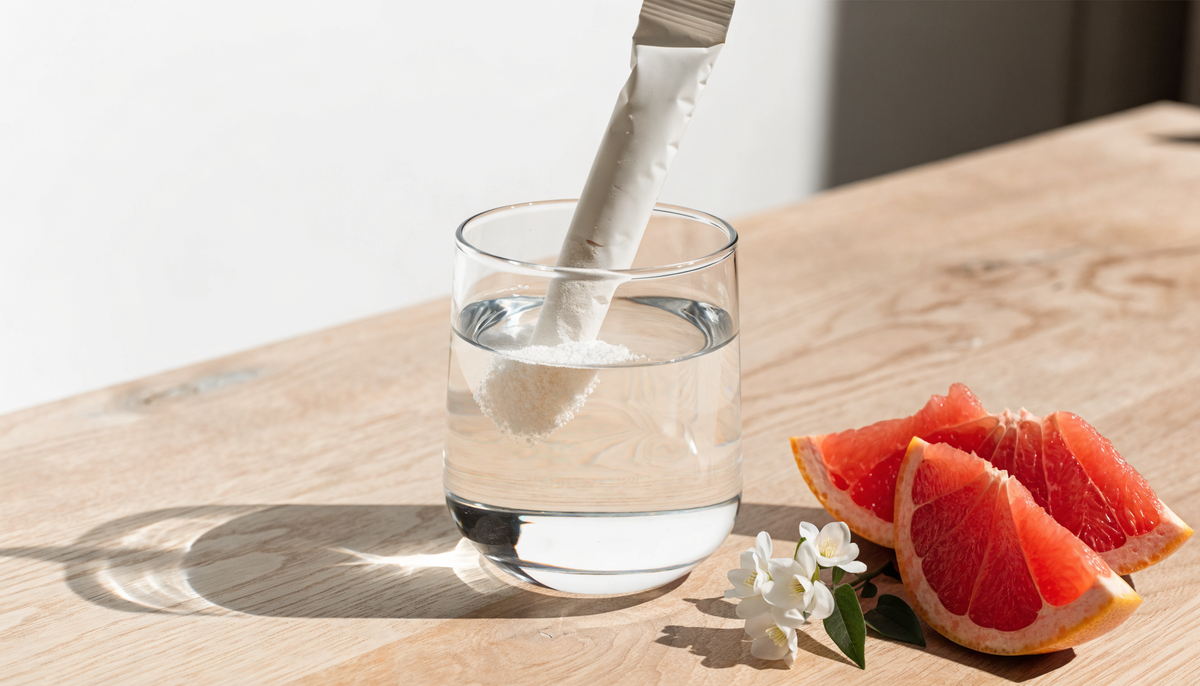
A 650 ml reusable water bottle saves you from buying three plastic bottles at airport prices. Powders like Buddy electrolyte sticks fit in your pocket and are easy to pack for a trip: just add a stick to your water bottle whenever you need it, and you’re all set.
If you’re comparing several electrolyte brands before you leave, the independent website drinkscore.info publishes the sodium, potassium, and sugar content of each product, so you can check the facts rather than rely on the packaging.
Signs you’re dehydrated during the flight
The first signs of dehydration on a flight are a dry mouth and lips, stinging eyes, mild fatigue, and darker urine on arrival. Nothing alarming for a healthy adult, but it’s a sign that you should drink a little more regularly.
Dry eyes and tight-feeling skin are mainly caused by dry air. Lip balm and moisturizer help more than an extra liter of water. If you want to get better at recognizing your body’s signals day to day, we go over them in our article on signs of an electrolyte deficiency.
Your in-flight hydration plan: before, during, and after
Staying well hydrated on a flight starts the day before and continues through the evening you arrive, not just during the hours in the air. Here’s a three-step plan.
The day before and the day you leave
Drink normally throughout the day, eat water-rich fruits and vegetables, and avoid kicking off your trip with drinks the night before. A boozy night before an early flight is a recipe for feeling rough on arrival.
During the flight
Fill your water bottle after security, drink a large glass every hour, ask for water whenever the trolley comes by, and take a few steps down the aisle from time to time. If you sleep, drink a glass when you wake up.
When you arrive
Start drinking regularly again, especially if you land in hot weather. That's when an electrolyte stick or a drink from the Buddy hydration range can come in handy, alongside water and not as a replacement for it. Then align your meals and light exposure with the local time to adjust to the time difference faster.
Key takeaways
On a plane, dry air makes you lose water without noticing it. Aim for about 2 dl of water per hour of flight, start before boarding, limit alcohol and back-to-back coffees, and keep an empty water bottle to get through security. Water is enough for the vast majority of flights; electrolytes are a little extra for long journeys and arrivals in hot weather. Have a good trip.
Frequently asked questions about staying hydrated on a plane
How many liters of water should you drink during a long-haul flight?
For a long-haul flight of 8 to 12 hours, plan on about 1.6 to 2.4 liters of water over the whole trip, or one large 2 dl glass per hour. Drink small, regular sips rather than a large amount all at once.
How can you take a water bottle through airport security?
You can take a water bottle through airport security as long as it's empty. You can then fill it at water fountains or in a café in the departure area, so you don't have to buy bottles there.
Why do you feel thirstier on a plane?
You feel thirstier on a plane because the cabin air is very dry, often with humidity below 20%. You lose more water through breathing without sweating or noticing it.
Coffee on a plane: good idea or bad idea?
Having a coffee on a plane isn't a problem; it's having several cups in a row that can cause issues. Caffeine can interfere with your sleep on board and make it harder to adjust to the time difference, so keep water as your main drink.
When should you take electrolytes on a plane?
Electrolytes are useful on planes, especially on long-haul flights, during long travel days or if you land in very hot weather. For a short flight, water is more than enough.